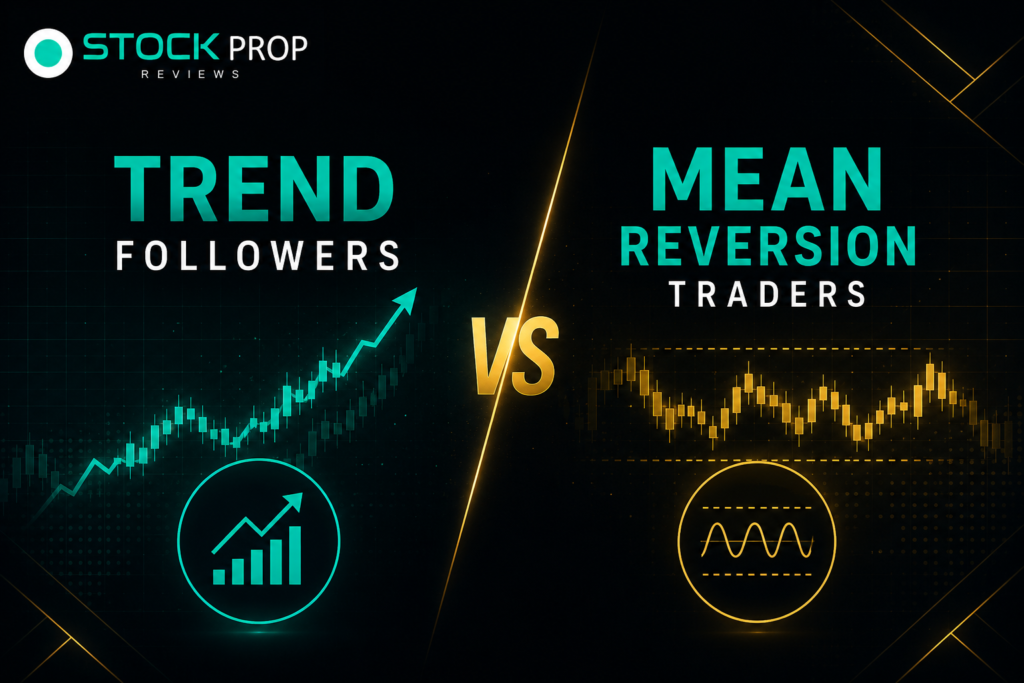
Selecting the right prop firms for trend trading involves more than just profit splits and challenge fees. Your trading strategy must be in compliance with the rules of the firm, the risk limits and the execution environment. What works for a trend follower can put undue pressure on a mean reversion trader and vice versa.
This guide is for traders who are looking at prop firms from the perspective of how they trade and not just looking for the biggest account size. It is a great tool for beginners, funded traders, swing traders and futures traders who want to hone their strategy. This is not for traders who jump from system to system or trade without a defined edge.
We will examine the impact of different prop firm rules on trend following and mean reversion strategies in real trading conditions, rather than ranking firms based on marketing claims.
What IsTrend Following?
Trend following is trying to get on board with big directional moves in the market. They wait for the confirmation of a trend before entering, knowing they may miss the start of the move, but have more confidence in the trade.
A typical trend-following trader:
- Keep trades for a few hours or a few days.
- You lose a little here and there, hoping to win big.
- Use of trailing stops.
- Assists in winning positions in strong trends.
For example, if EUR/USD breaks above a multi-week resistance level after strong economic data, a trend trader may ride that move for several sessions instead of taking quick profits.
What Is Mean Reversion Trading?
Mean reversion assumes that markets frequently return to an average price after moving too far in one direction.
These traders typically:
- Fade overextended price moves.
- Take profits quickly.
- Win more often but with smaller gains.
- Require precise entries.
- Avoid chasing momentum.
Sell a sharp rally into a major resistance level as momentum starts to fade, for example.
There is no better strategy, period. Success depends upon market conditions and disciplined execution
Trend Following vs Mean Reversion Comparison
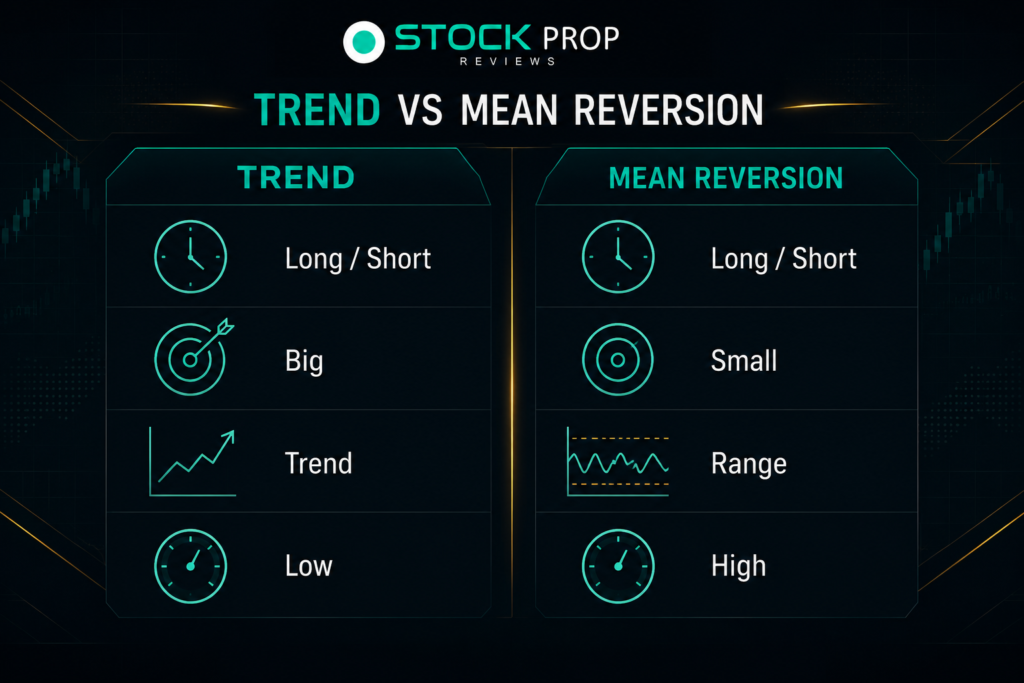
| Factor | Trend Following | Mean Reversion |
| Holding time | Medium to long | Short |
| Win rate | Usually lower | Usually higher |
| Reward-to-risk | High | Moderate |
| Drawdown periods | Can last weeks | Often shorter |
| Best markets | Strong trends | Ranging markets |
| Biggest risk | Late reversals | Trend continuation |
One of the biggest misconceptions is that a higher win rate automatically means a better strategy. Many profitable trend followers win fewer than half of their trades while remaining consistently profitable because their winning trades are much larger than their losses.
Why Prop Firm Rules Matter More Than Strategy Names
Many comparison articles explain differences in strategy, and then stop. They seldom explain how the prop firm rules impact the profitability of a strategy.
A strategy that works perfectly on a personal account might have problems under strict evaluation rules.
Common restrictions include:
- Daily Loss Limits
- Max. overall drawdown
- Minimum number of trading days
- Trading restrictions on shares
- Weekend holding guideline
- Consistency requirements
- Position size limits
Often, these rules can tell you whether your strategy has enough room to work as designed.
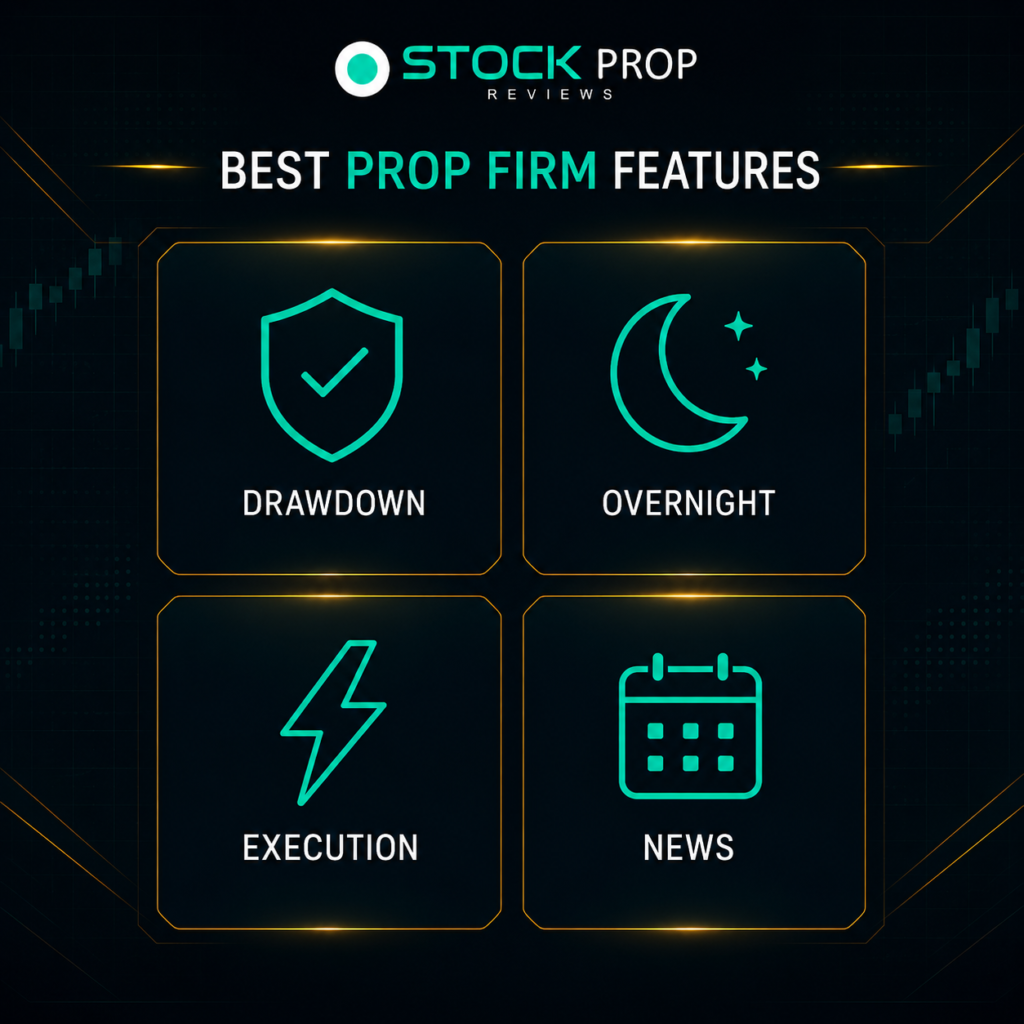
Best Prop Firm Features for Trend Trading
Trend traders generally benefit from firms that allow patience.
Larger Drawdown Buffers
Trend trades often experience temporary pullbacks before continuing higher.
If a firm’s daily loss limit is extremely tight, traders may be forced to exit perfectly healthy positions.
Overnight Holding
Many strong trends continue over several trading sessions.
Firms allowing overnight positions give trend traders greater flexibility.
Flexible Consistency Rules
Trend followers rarely earn identical profits every day.
One large winner may account for an entire month’s gains.
Strict consistency rules can penalize this natural trading pattern.
News Flexibility
Major trends frequently begin after economic releases.
Firms with restrictive news rules may prevent traders from participating in some of the market’s strongest moves.
Best Prop Firm Features for Mean Reversion Traders
Traders who use mean reversion usually look for other conditions.
Tight Spreads
Efficient execution is needed to hit small profit targets.
Even slightly larger spreads can have a dramatic effect on profitability.
Fast Execution
Fast in and fast out is important when you are looking for relatively small moves.
Lower Overnight Risk
Many mean reversion traders close their positions before the end of the session.
The importance of weekend holding rules thus diminishes.
Stable Market Conditions
Since mean reversion assumes prices return toward an average, sudden volatility spikes can quickly invalidate trades.
Strategy Fit Analysis
| Firm Characteristic | Better for Trend Followers | Better for Mean Reversion |
| Higher drawdown allowance | Yes | Helpful |
| Overnight holding | Excellent | Less important |
| Tight spreads | Good | Critical |
| News trading allowed | Excellent | Mixed |
| Consistency rules | Less favorable | Often suitable |
| Fast execution | Helpful | Essential |
Rather than asking which prop firm is the best overall, ask which one matches how your edge actually works.
How Trend Followers Usually Fail Prop Firm Challenges
Many failures are not caused by poor analysis.
Instead, they come from adapting the strategy to fit challenge rules.
Common examples include:
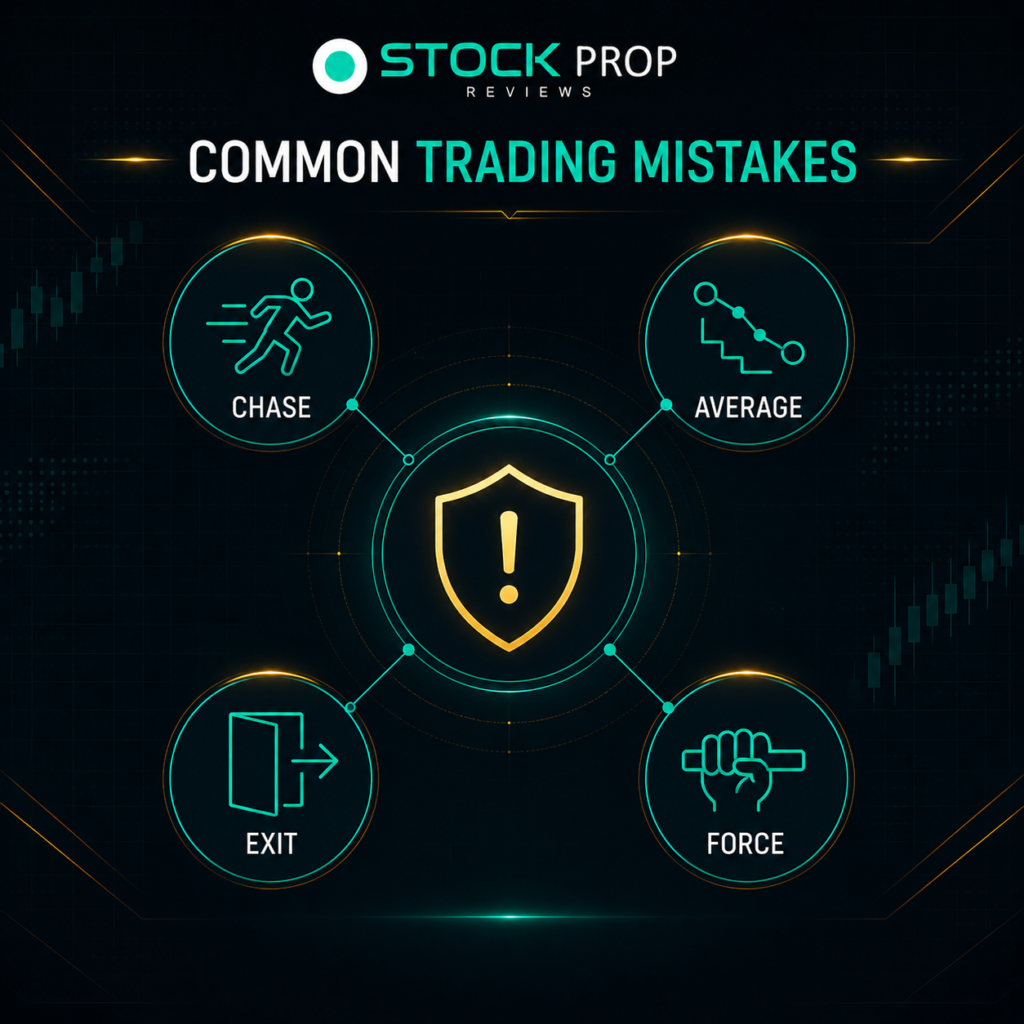
Trying to force daily profits instead of waiting for trends.
Closing trades too early because of drawdown concerns.
Increasing position size after several losing trades.
Entering before confirmation to avoid missing moves.
Ignoring changing market conditions.
Trend strategies naturally experience periods with few opportunities. Traders often become impatient and begin forcing trades that fall outside their plan.
How Mean Reversion Traders Usually Fail
Mean reversion traders often encounter different problems.
Many continue fading price moves even after markets shift into strong trends.
Other common mistakes include:
Holding losing trades hoping price returns.
Ignoring momentum.
Adding repeatedly to losing positions.
Trading during major news events.
Using excessive leverage.
A strategy with a high historical win rate can produce large losses if traders refuse to recognize when market conditions have changed.
Truth vs Opinion
Truth
Trend-following systems often have lower win rates but higher average profits per winning trade.
Mean reversion systems frequently produce higher win rates with smaller average gains.
Neither characteristic automatically makes one superior.
Opinion
Many new traders are suckered into mean reversion because the frequent winning trades are psychologically rewarding.
But some later struggle emotionally when one large loss erases many small gains.
Trend following can be uncomfortable as traders take many small losses before taking a big move.
Neither psychological profile is incorrect. The best choice is the approach that you can consistently execute.
Data Meets Trading Psychology
Professional traders rarely evaluate strategies using only profit percentage.
They examine:
- Maximum drawdown. (MDD)
- Streak length
- Risk adjusted performance
- Frequency of trade (times per week)
- Sustainability of feelings
Imagine two traders finishing the year with identical returns.
Trader A wins 40 percent of trades.
Trader B wins 75 percent.
Without examining average win size, average loss size, and drawdowns, neither result tells the full story.
This is where many new prop traders make poor decisions. They chase high win rates without understanding the underlying risk profile.
What Most Competitors Don’t Explain
Most articles compare the strategies themselves and do not consider the impact of prop evaluations on trader behavior.
Three issues deserve further consideration.
First, evaluation pressure often makes traders give up proven systems. A trend trader who waits three days for a quality setup may force mediocre trades instead as the challenge clock is ticking.
Second, strict daily loss limits disproportionately hurt strategies that need to give positions room to develop. Traders manage valuation rules instead of managing market risk.
Thirdly, profitability is equally important as psychological compatibility. No matter how well a trend system has performed in the past, a trader who cannot emotionally tolerate frequent small losses is unlikely to follow it consistently.
Best For and Worst For
Trend Following Is Best For
- Swing traders.
- Traders are comfortable with patience.
- Those seeking larger reward-to-risk opportunities.
- Traders who prefer fewer but higher-quality setups.
Trend Following May Not Suit
- Traders need frequent activity.
- Scalpers.
- Traders uncomfortable with losing streaks.
- Those using extremely small drawdown limits.
Mean Reversion Is Best For
- Intraday traders.
- Range-market specialists.
- Traders with disciplined exits.
- Those comfortable taking profits quickly.
Mean Reversion May Not Suit
- Traders who average into losing positions.
- Beginners who ignore market structure.
- Traders who continue fading strong trends.
Alternatives to Consider
If your strategy struggles under one firm’s rules, changing firms may make more sense than changing your trading edge.
A firm with larger drawdown flexibility may suit trend followers.
A firm known for stable execution and competitive spreads may better support mean reversion traders.
If you primarily trade equities rather than forex or CFDs, TradeThePool offers a regulated stock prop trading environment with transparent rules and clearly defined risk parameters. Readers can get up to 10% discount when purchasing through our TradeThePool link.
You should also compare rule structures before deciding. Detailed evaluations like our FTMO review and FundedNext review highlight differences that simple comparison tables often miss. Our FTMO vs FundedNext comparison also shows how the same account sizes can lead to very different trading experiences. If you’re still on the fence about strategies, take a look at our article on whether passing a prop challenge is truly representative of trading skill for another take on long-term consistency.
Quick Verdict
There is no universal best prop firm for every trader.
Trend followers generally perform better with firms offering:
- Options for flexible drawdown.
- Holding overnight.
- Relaxed consistency guarantees.
Mean reversion traders usually benefit from:
- Tight execution.
- Competitive spreads.
- Reliable fills.
- Stable intraday conditions.
Pick your prop firm based on your strategy, not the other way around.
If you trade stocks and like simple rules with clear risk management, then TradeThePool is another one to research. Readers can receive up to 10% off when purchasing through our TradeThePool link, but it’s still important to check its rule structure fits your trading style before committing.
FAQs
What is the best strategy for prop firm challenges?
In all cases, neither strategy is superior. It really depends on whether the firm has rules consistent with how you trade. Trend followers tend to favor flexible drawdown policies. Traders of mean reversion strategies tend to have a high premium on execution quality and low trading costs.
Should Trend Traders Have Larger Drawdown Limits?
Yes, often. There can be pullbacks in a trend trade before it reaches its profit potential. Larger drawdown allowances help prevent premature exits.
Are mean reversion strategies more safe?
Not necessarily. While they are often capable of higher win rates, risk controls are crucial, as one poorly managed losing trade can erase many prior gains.
What should the beginner go for? Trend following or mean reversion?
The first thing a beginner needs to do is to find out which strategy suits their personality and discipline. Generally it is better to stick to a simple system and follow it consistently than to move from one trading style to another.
Can the same prop firm do both strategies?
Yes, if its rules are sufficiently flexible. The best firms do not demand one single style, they accommodate different styles of trading with reasonable drawdown limits, clear risk guidelines and reliable execution.