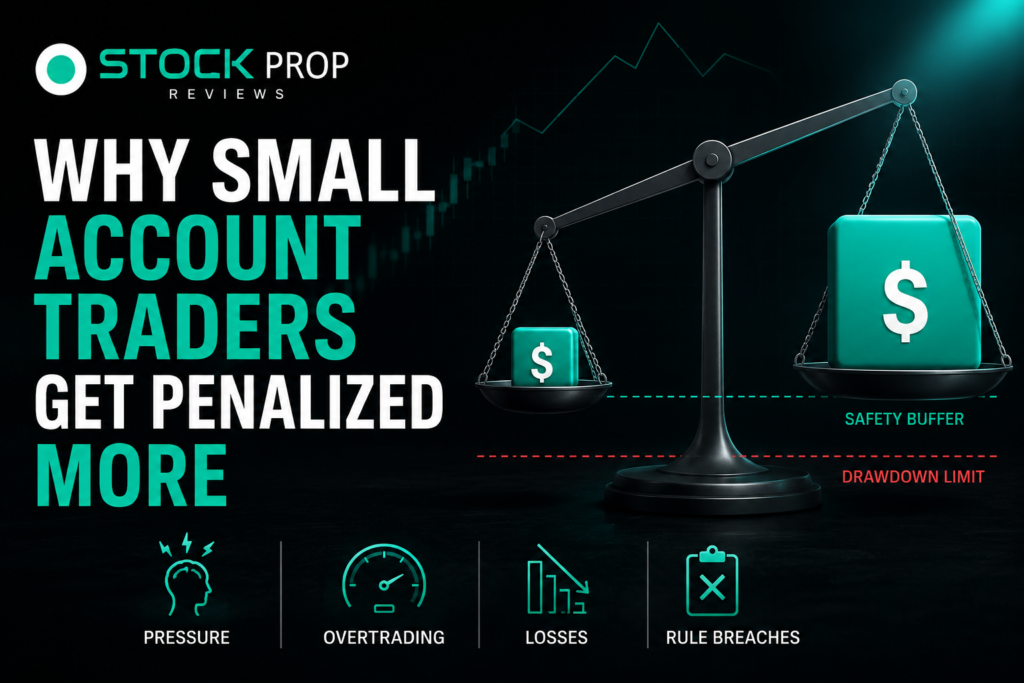
Most traders assume that a small prop account is simply a cheaper version of a larger one.
On paper, that seems true. The rules often look identical. A firm may offer the same profit target, drawdown percentage, and payout structure across multiple account sizes. The only obvious difference appears to be the amount of capital.
The trading experience is usually very different.
Small prop account risks tend to show up much faster because traders have less room to recover from mistakes, less flexibility in position management, and far more pressure to generate meaningful returns. What looks like a manageable challenge on a larger account can feel restrictive on a smaller one.
This article is for beginners, evaluation traders, and funded traders considering lower-cost prop accounts. It is not aimed at experienced traders who already have a proven process and treat prop accounts as part of a broader trading business.
Quick Verdict
Small accounts are not inherently bad. In fact, they can be useful training grounds for developing discipline.
The problem is that many traders approach them with expectations that do not match reality. They want meaningful income from an account that was designed primarily as an evaluation tool. Once that expectation gap appears, risk-taking often increases and account failures become more common.
The account size itself is rarely the reason traders fail. The way traders react to the limitations of a small account is usually the bigger issue.
Understanding Small Prop Account Risks
A small prop account carries the same market risk as a larger account, but the practical impact of each decision feels different.
Every loss represents a larger emotional event. Every drawdown feels more significant. Every winning streak seems more important.
This changes behaviour.
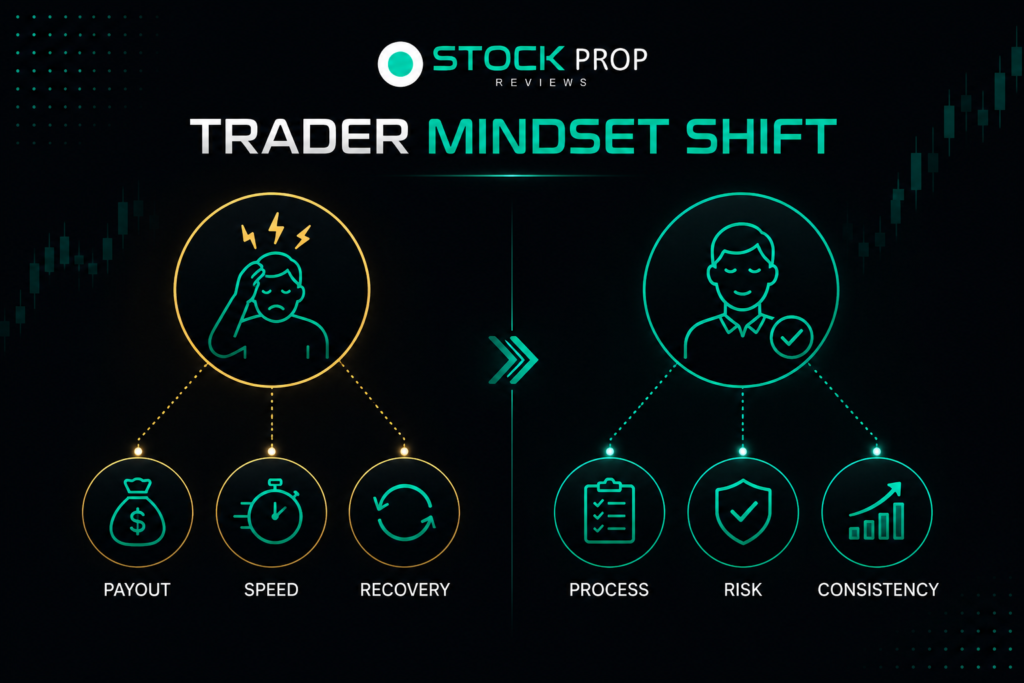
A trader working with a small account often becomes overly focused on short-term results. Instead of following a process, they begin calculating what each trade means for a future payout. That shift in thinking can lead to decisions that would never be made under normal circumstances.
When traders talk about small prop account risks, they are usually referring to three things:
- Limited drawdown flexibility
- Pressure to grow the account quickly
- Increased emotional attachment to trade outcomes
These issues often appear together rather than individually.
Why Drawdown Rules Feel Tougher on Small Accounts
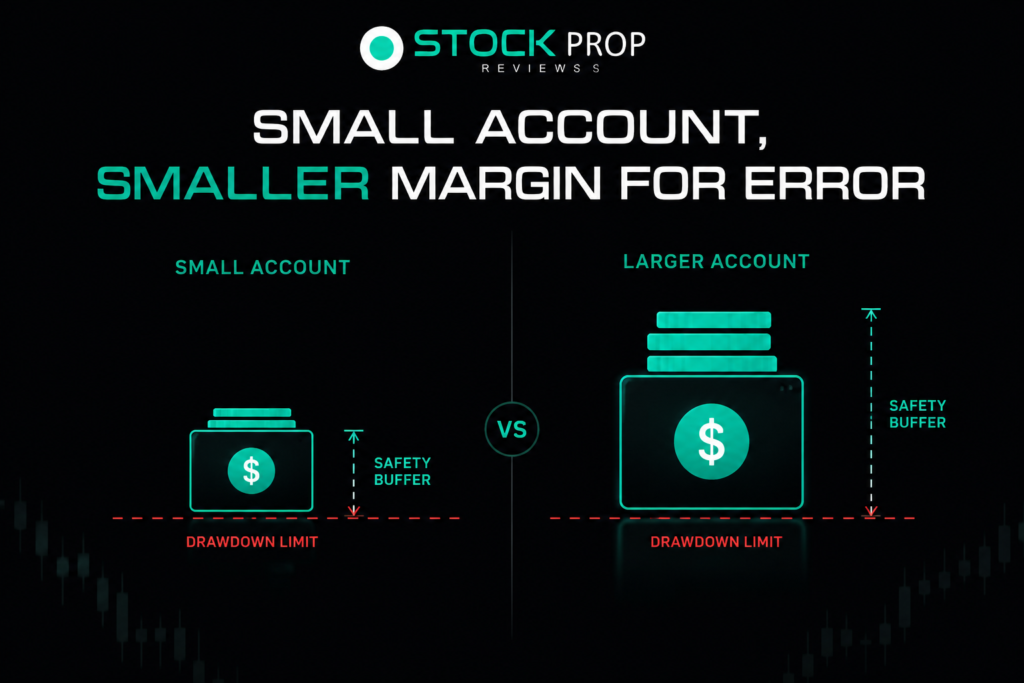
Most prop firms use percentage-based risk limits. A 5% maximum drawdown is still 5%, whether the account is worth $5,000 or $100,000.
Mathematically, the rules are equal.
Psychologically, they are not.
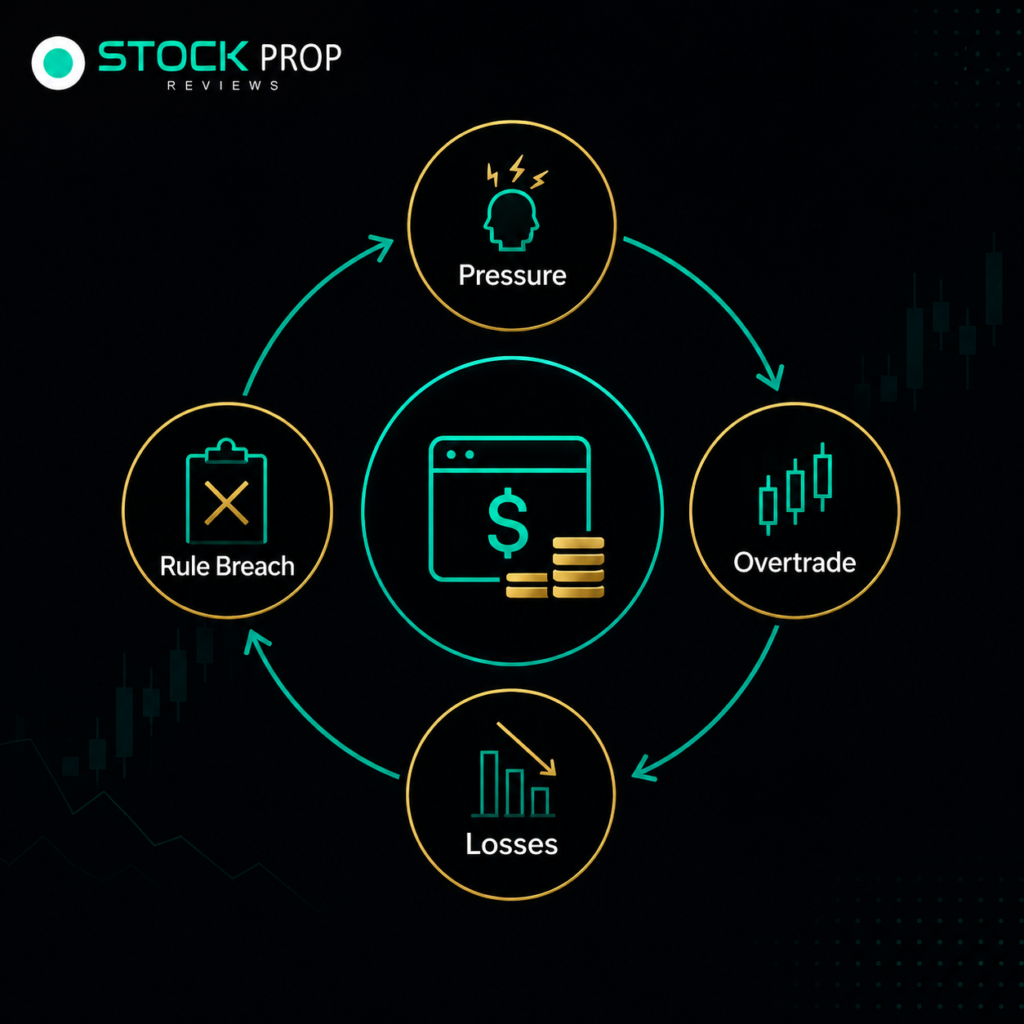
Consider two traders who each lose three trades in a row. The percentage loss may be identical, but the trader on the smaller account often feels closer to failure. As available drawdown shrinks, confidence tends to shrink with it.
This is where many traders begin changing their behaviour.
They hesitate on valid setups. They cut winners too early. They increase position size to recover losses. None of these reactions improve performance, yet they become increasingly common as the account balance approaches a risk limit.
The drawdown itself is not the only challenge. The mental pressure surrounding it is often what causes the real damage.
The Income Expectation Problem
One topic that receives surprisingly little attention is the relationship between account size and income expectations.
Many traders purchase a small challenge account because it is affordable. There is nothing wrong with that decision. Problems begin when traders expect the account to produce income that would normally require a much larger allocation.
Imagine two traders generating the same percentage return over a month.
| Account Size | Monthly Return | Profit Split (80%) |
| $5,000 | 8% | $320 |
| $100,000 | 8% | $6,400 |
The performance is identical.
Often this can lead to frustration. The trader may realise that even a strong month results in a relatively modest payout. Instead of accepting the limitations of the account they try to accelerate growth by taking larger positions or trading more often.
That is often where the problems start.
How Small Accounts Expose Trading Mistakes Faster
A larger account can sometimes hide poor habits for longer.
A trader might overtrade, enter impulsively, or deviate from a plan without immediately violating risk limits. The account absorbs the damage and allows the trader to continue.
Small accounts are less forgiving.
A week of poor decisions can end an evaluation. Several emotional trades can erase weeks of steady progress.
This is one reason many firms see high failure rates among newer traders. The account size acts like a magnifying glass. Existing weaknesses become visible very quickly.
In that sense, small accounts are not necessarily unfair. They simply reveal problems that larger accounts may temporarily conceal.
What Most Competitors Miss
Many articles discussing small accounts focus almost entirely on position sizing.
Position sizing matters, but it is not the whole story.
The bigger issue is often the relationship between risk and opportunity.
A trader managing a small account frequently feels forced to choose between two undesirable options. They can trade conservatively and accept slow growth, or they can trade aggressively and increase the risk of failure.
Most traders understand the mathematics of risk management. What they struggle with is accepting the pace of progress that proper risk management requires.
That tension explains why so many accounts fail despite traders knowing the rules.
The problem is usually not a lack of information.
It is a lack of patience.
Small Account vs Large Account Comparison
| Factor | Small Account | Larger Account |
| Margin for error | Lower | Higher |
| Emotional pressure | Higher | Lower |
| Recovery after losses | More difficult | Easier |
| Position management flexibility | Limited | Better |
| Potential payout | Lower | Higher |
| Risk of rule violations | Higher | Lower |
This does not mean every trader should buy the largest account available.
It simply highlights that account size influences trading behaviour more than many people realize.
The Counterargument: Why Starting Small Still Makes Sense
Despite the challenges, there are good reasons to start with a smaller account.
For beginners, the lower cost reduces financial risk. Losing an evaluation account is disappointing, but losing a significant amount of money on a large challenge can be far more damaging.
Small accounts can also help traders focus on execution rather than profits. When approached correctly, they become a training environment where mistakes are identified before larger capital allocations are involved.
Many consistently funded traders started with small accounts. The difference is that they treated the process as skill development rather than a shortcut to income.
That mindset matters more than account size.
Who Should Avoid Small Accounts?
Small accounts are often a poor fit for traders who need immediate returns from trading.
They can also be problematic for traders who frequently increase risk after losses or those who have not yet developed a repeatable strategy.
The tighter the risk limits, the more important discipline becomes. Traders who struggle with emotional decision-making often discover that small accounts amplify those weaknesses.
In many cases, waiting until a strategy has been tested thoroughly can be a better decision than repeatedly purchasing new evaluations.
Alternative Approaches Worth Considering
Some traders do better on bigger evaluation accounts . The more room for drawdown , the more they can trade their strategy naturally .
Others like stock-focused prop firms with clear risk structures. TradeThePool is an example of a regulated stock prop firm that places importance on rule clarity and risk management. Readers get up to 10% discount when purchasing through our TradeThePool link.
No matter which firm they choose, traders should focus more on assessing risk rules than marketing claims. The drawdown model of a firm will have a greater impact on long-term success than almost any promotional feature.
For further research, a look into in-depth prop firm reviews, comparison of the different evaluation models and opinion pieces targeted towards traders addressing payout rules could give a more realistic idea of what to expect.
The Reality Most Traders Discover Later
Many traders enter the prop industry believing that account size is primarily a financial consideration.
Over time, they realize it is also a psychological one.
Small accounts create pressure because every decision feels more important. Losses appear larger. Progress feels slower. The temptation to force results becomes stronger.
The traders who adapt are usually the ones who stop measuring success by short-term payouts. Instead, they focus on following a repeatable process and preserving access to capital.
That approach may sound less exciting, but it is far closer to how successful traders actually operate.
FAQs
Are small prop accounts harder to pass?
For many traders, yes. The rules may be identical on a percentage basis, but the reduced margin for error often creates more psychological pressure.
Why do traders fail small accounts so often?
The most common reasons are overtrading, increasing risk after losses, and trying to generate unrealistic returns within a short period.
Can a beginner start with a small prop account?
Yes. Small accounts can be useful learning tools as long as they are treated as part of the development process rather than a source of immediate income.
Is a larger account always better?
Not in all cases. Larger accounts are more expensive but offer greater flexibility. The right choice depends on experience, trading goals and risk appetite.
What is the biggest small prop account risk?
The biggest risk is often behavioural. Many traders change their approach when they feel pressured to grow the account quickly, which leads to unnecessary mistakes.