
Trading should get easier with success.
For many prop traders, the reverse is true.
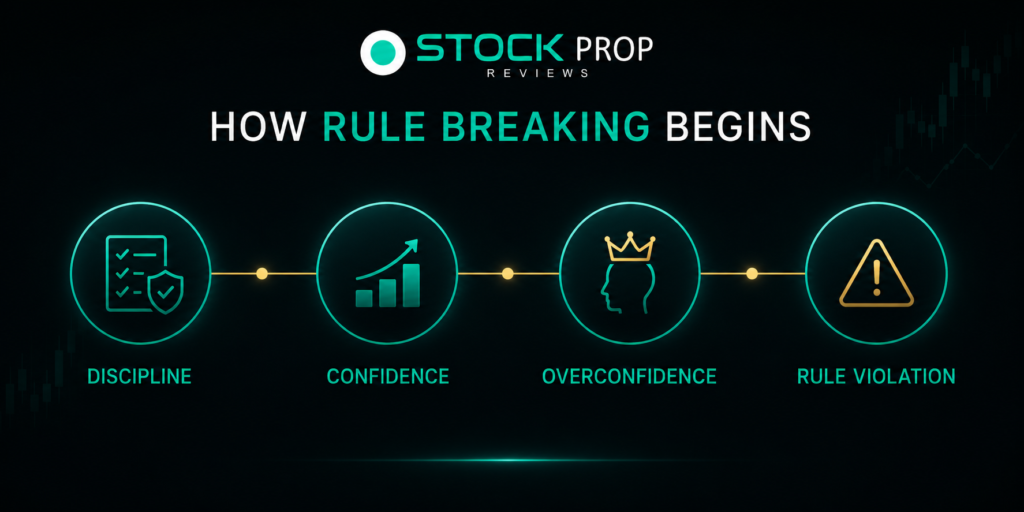
The first month of profitability is often when discipline starts to waiver for a trader. The challenge phase is over, confidence is high, and suddenly the rules that seemed essential a few weeks ago start to feel restrictive.
This is why so many traders break prop firm rules within days of being funded or within days of posting their first significant profits.
The problem is usually not a bad strategy. This is a change in behaviour.
This article is for funded traders, evaluation traders and all traders trying to build consistency inside a prop firm account. It’s not for traders who are looking for a shortcut to fast profits.
Success Changes the Way Traders Think
Most traders approach an evaluation with extreme caution.
They know exactly how much they can lose. They respect daily drawdown limits. Every position is measured carefully because one mistake could end the challenge.
Then something changes.
The trader has a strong month. Maybe they make 6%, 8%, or even 10%. Nothing dramatic happens immediately, but their relationship with risk starts to shift.
Trades that once looked questionable suddenly seem acceptable.
Position sizes start creeping higher.
A trader who previously waited patiently for one or two quality setups begins looking for opportunities all day.
The interesting part is that most traders do not notice this happening.
From their perspective, they are simply becoming more confident.
In reality, they are becoming less disciplined.
Why Early Success Is Often More Dangerous Than Early Failure
Most trading articles focus on losing streaks.
Those are obviously difficult periods, but losing often forces traders to become more careful. They reduce size, review mistakes, and pay closer attention to rules.
A profitable month can create the opposite effect.
When traders experience early success, they sometimes assume they have figured out the market. The recent profits feel like proof that they understand what comes next.
Markets rarely reward that mindset for long.
The problem is not confidence itself. Every successful trader needs confidence. The problem starts when confidence removes caution.
That distinction is where many funded accounts are won or lost.
What Most Discussions About Rule Breaking Miss
Much of the content on trader psychology is about greed.
There’s greed, sure, but it’s not always the main reason traders break prop firm rules.
More often than not, the trader convinces themselves that the rules are no longer as important as they once were.
The rules feel like a protection during the challenge phase.
After a profitable month they can start to feel like obstacles.
This is a subtle shift in thinking.
The trader is not trying to cheat the rules.
They just think they can push a little harder.
One more trade.
A little bit larger.
Holding on to a trade too long.
None of these decisions looks serious in isolation.
Together they set the conditions for breaking a rule.
The Most Common Pattern After a Winning Month
Many funded traders follow a surprisingly similar path.
| Phase | Typical Behaviour |
| Evaluation | Conservative risk management |
| First Profitable Month | Growing confidence |
| Second Month | Increased position size |
| First Drawdown | Emotional decision-making |
| Rule Violation | Account damage or loss |
Not every trader follows this exact sequence, but the pattern appears often enough to be difficult to ignore.
The trader who survives long term is usually the one who recognises the pattern before reaching the final stage.
Position Sizing Is Usually Where Problems Start
If you review accounts that failed after an initially strong performance, position sizing frequently stands out.
The strategy often remains unchanged.
The entries look similar.
The setups are familiar.
The risk is different.
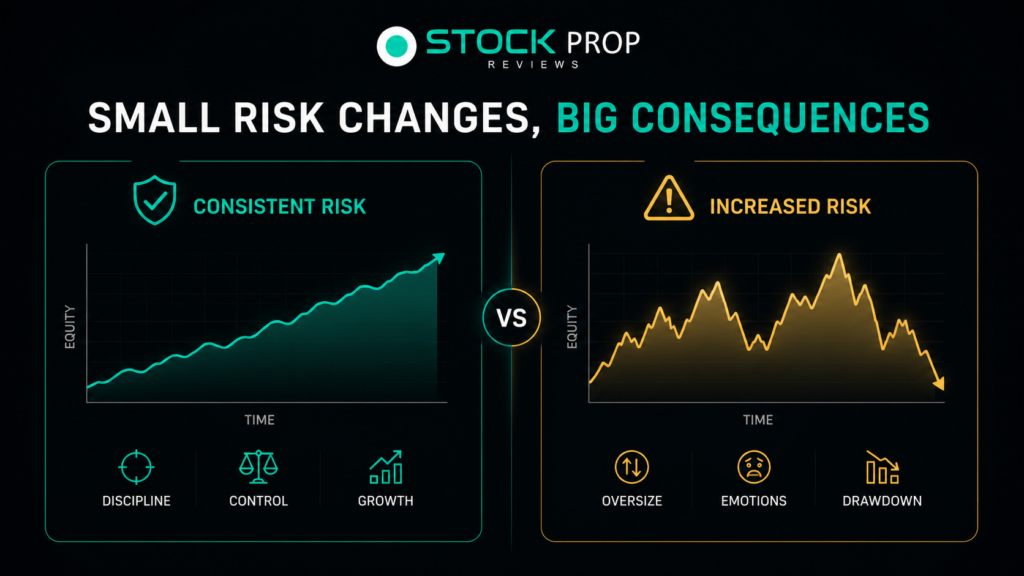
A trader who spent weeks risking half a percent per trade suddenly starts risking one and a half percent or two percent.
That adjustment may not seem significant during a winning streak.
During a losing streak, it changes everything.
What would have been a manageable drawdown becomes a stressful situation. Stress leads to emotional decisions, and emotional decisions often lead directly to rule violations.
This is one reason experienced traders spend so much time discussing risk and so little time discussing individual setups.
The Payout Trap
Another situation that receives surprisingly little attention is the period before a trader’s first payout.
Logic suggests traders should remain calm.
The money is close.
The hard work is already done.
Yet many traders become more aggressive.
They start calculating how much larger the payout could be if they make just a little more before withdrawal day.
Instead of protecting gains, they begin chasing additional profits.
Many funded traders have lost more money trying to increase a payout than they lost during the entire evaluation process.
That is not a strategy issue.
It is a behavioural issue.
What Experienced Traders Do Differently
One noticeable difference between newer funded traders and experienced funded traders is how they react to profitable periods.
Newer traders often see profits as permission to take more risk.
Experienced traders often see profits as a reason to maintain the same process.
They understand something that takes many traders years to learn:
A good month does not necessarily mean trading has become easier.
It may simply mean market conditions were favourable.
The goal is not to maximize every profitable period.
The goal is to remain in the game long enough to experience many profitable periods.
That mindset changes decision-making.
Disciplined Trader vs Rule-Breaking Trader
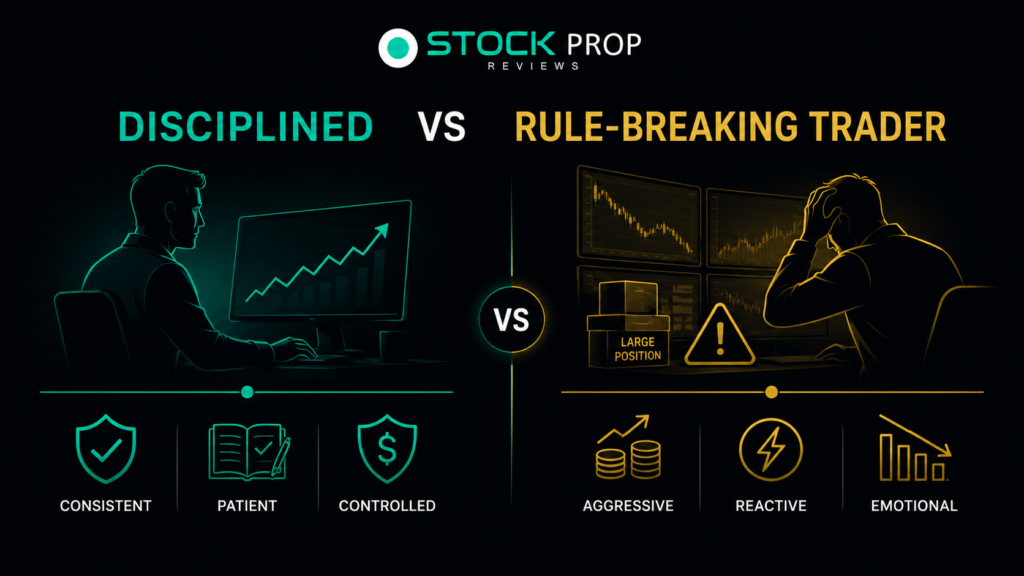
| Factor | Disciplined Trader | Rule-Breaking Trader |
| Risk Per Trade | Consistent | Frequently adjusted |
| Trade Selection | Patient | Increasingly aggressive |
| Response to Losses | Controlled | Reactive |
| Response to Profits | Stable | Overconfident |
| Account Longevity | Generally longer | Often shorter |
The difference is rarely talent.
It is usually consistent.
Where Prop Firms Can Help
Clear rules matter.
One reason firms like TradeThePool continue attracting attention is that they provide transparent risk parameters within a regulated stock trading environment.
That does not eliminate behavioural mistakes, but it removes some uncertainty around expectations and account management.
Readers can get up to 10% discount when purchasing through our TradeThePool link.
The more important consideration is whether a trader can consistently follow the firm’s rules after becoming profitable.
That is where many accounts succeed or fail.
The Lesson Most Traders Learn the Hard Way
When traders lose funded accounts after a successful month, they often blame the market.
Sometimes the market deserves part of the blame.
More often, the warning signs appeared earlier.
Risk increased.
Patience declined.
Rules became flexible.
The market simply exposed those changes.
The uncomfortable reality is that the behaviours that help traders pass evaluations are usually the same behaviours that keep funded accounts alive.
Many traders spend months learning how to make money.
Far fewer spend time learning how to handle success.
In prop trading, success is often the point where discipline is tested most.
FAQs
Why do traders break prop firm rules after a profitable month?
Success often increases confidence and reduces caution. Traders may increase risk, trade more frequently, or become less selective with setups.
Is overconfidence a common reason funded accounts fail?
Yes. Many funded accounts are lost because traders become more aggressive after early success rather than continuing the process that produced the profits.
Should traders increase position size after one good month?
Most experienced traders prefer several months of consistent results before making meaningful changes to risk exposure.
What rule is violated most often?
Most traders lose funded accounts because of daily drawdown limits and overexposure to risk.
How can traders avoid breaking prop firm rules?
Another way to minimise rule breaking is to keep the risk parameters consistent, review trades periodically, and have the same discipline in winning periods as in losing periods.