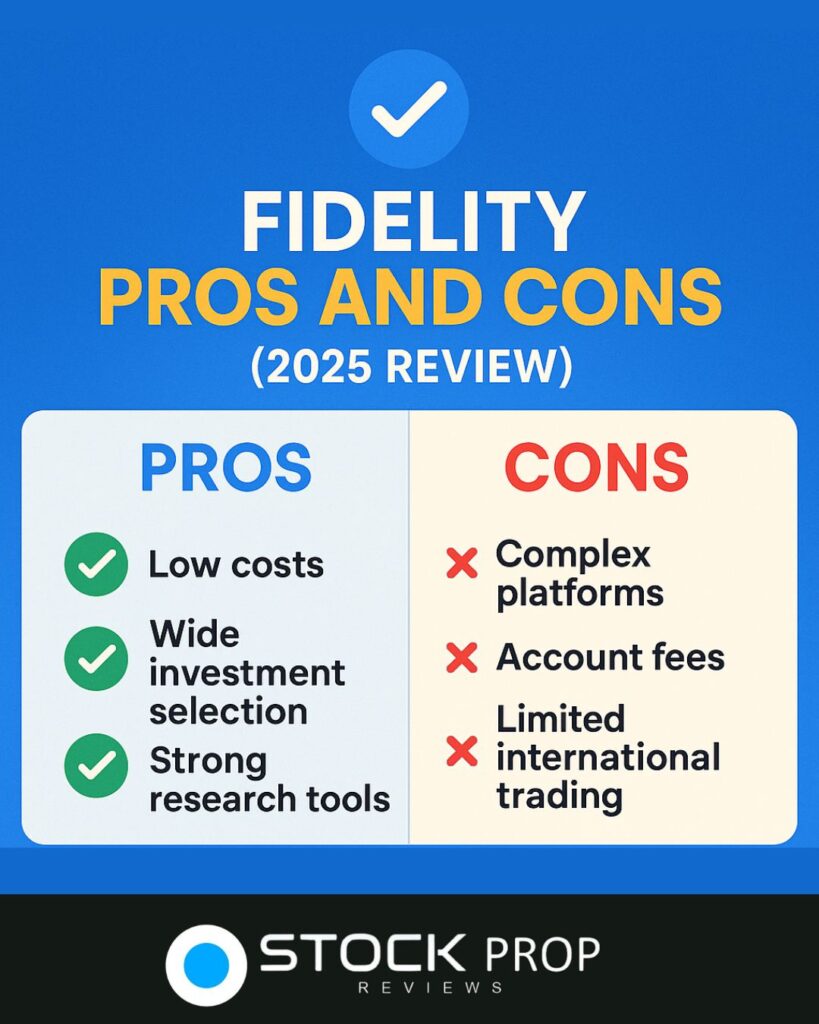
Fidelity Investments is one of the most trusted names among stock brokers in the USA. With over $11 trillion in assets under administration, Fidelity has earned a reputation for being one of the best trading platforms for long-term investors and retirement planners. But is it still the right choice in 2025 for new and intermediate traders looking for low commission brokers and easy-to-use platforms?
In this guide, we’ll explore the pros and cons of Fidelity, how it compares to other brokers, and whether it’s the best fit for your trading journey. If you’re starting out or looking to lower costs, this article is for you.
Why Fidelity Matters in 2025
Choosing a broker isn’t just about saving money—it’s about access to tools, platforms, education, and overall experience. Fidelity is one of the oldest and most established brokers in the U.S. but continues to innovate.
Whether you’re investing for retirement or actively trading, knowing the strengths and weaknesses of your broker can make or break your success.
Fidelity Pros and Cons at a Glance
| Pros | Cons |
|---|---|
| $0 stock and ETF commissions | Not ideal for day traders |
| Strong research tools | Platform can be overwhelming for newbies |
| Excellent customer support | No cryptocurrency trading |
| Fractional shares available | Higher margin rates than some rivals |
| Highly rated mobile app | Limited international market access |
Fidelity Pros: What Makes It a Great Broker
1. Zero Commission Trading
- $0 commissions on U.S. stocks and ETFs
- Low-cost options trading at $0.65 per contract
- No account minimums
2. Top-Tier Research and Tools
Fidelity offers free access to:
- Analyst reports
- Advanced screeners
- Market insights
- In-depth stock data
3. Fractional Shares
Trade stocks from as little as $1. Great for beginners who want to build diversified portfolios without needing large capital.
4. Strong Mobile and Web Platforms
- Clean, intuitive interface
- Real-time quotes
- Custom watchlists
- Charting and technical indicators
5. Retirement and Wealth Planning
- Offers IRAs, 401(k) rollovers, and robo-advisors
- No maintenance fees for most accounts
- Automatic rebalancing and planning tools
6. Excellent Customer Support
- 24/7 live chat and phone service
- In-person support at over 100 U.S. branches
Fidelity Cons: Where It Falls Short
1. Limited for Active Day Traders
Fidelity is more focused on long-term investing. Active day traders might find faster, more feature-rich platforms elsewhere.
2. No Cryptocurrency Access
Unlike Robinhood or Webull, Fidelity doesn’t offer crypto trading—though you can invest in crypto-related ETFs.
3. Higher Margin Rates
Fidelity’s margin rates are higher than some discount brokers like Interactive Brokers.
| Broker | Margin Rate (Approx.) |
| Fidelity | ~12.075% |
| Interactive Brokers | ~6.83% |
| Webull | ~9.49% |
4. Learning Curve
Some beginners may find Fidelity’s dashboard and tools a bit complex at first.
Fidelity Pricing Breakdown (2025)
| Product | Fee/Cost |
| Stock/ETF Trades | $0 |
| Options Contracts | $0.65 per contract |
| Mutual Funds | Thousands of no-load |
| Account Minimum | $0 |
| Margin Interest | ~12.075% |
Fidelity vs. Other Popular Brokers
| Broker | Stock Fees | Options Fee | Crypto | Margin Rate | Best For |
| Fidelity | $0 | $0.65 | No | ~12.075% | Long-term, retirement |
| Robinhood | $0 | $0 (Gold) | Yes | ~12% | Beginners, mobile traders |
| Webull | $0 | $0.55 | Yes | ~9.49% | Active traders, charts |
| Interactive Brokers | $0 (Lite) | $0.65 | Yes | ~6.83% | Global, professional traders |
Who Should Use Fidelity in 2025?
Fidelity is a strong choice if you:
- Want to invest in retirement accounts (IRA, 401k, Roth IRA)
- Prefer a trusted brand with robust tools
- Need access to quality research and support
- Like to invest in mutual funds and ETFs
- Trade occasionally or hold long-term positions
It may not be the best fit if you’re focused on ultra-low margin rates, crypto day trading, or advanced algo trading.
Alternative: Trade Without Your Own Capital
What if you want to trade stocks in 2025 but don’t have a large deposit?
Many traders are also exploring TradeThePool stock prop firm in 2025 — these stock prop firms fund traders, so you can trade with little or no deposit.
Check out tradethepool.com — it’s a growing option for ambitious traders who want to scale their skills with funded accounts.
Why Choose TradeThePool?
- No large deposit needed when trading with a prop firm
- Up to $260,000 in funded capital
- Keep up to 75% of profits
- Remote access and flexible schedule
- Fast evaluation process for skilled traders
Prop firms help you get funded to trade remotely—a solid alternative if you don’t want to risk your own capital or wait years to build it.
FAQ: Fidelity Pros and Cons
1. Is Fidelity good for beginners?
Yes, it offers educational content, zero commissions, and fractional shares—great for new investors.
2. Can I trade options with Fidelity?
Absolutely. Options are priced competitively at $0.65 per contract.
3. Does Fidelity offer crypto trading?
No, but you can invest in crypto-themed ETFs.
4. How does Fidelity compare to Robinhood?
Fidelity is better for research and long-term investing. Robinhood is more mobile-focused and better for casual trading.
5. What’s Fidelity’s minimum deposit?
There’s no minimum to open a brokerage account.
6. Does Fidelity charge inactivity fees?
No. There are no inactivity or annual account fees.
7. What’s the biggest downside to Fidelity?
It’s not ideal for day traders or those looking for crypto access.
8. Is Fidelity trustworthy?
Yes. It’s one of the most respected and regulated brokers in the U.S.
Conclusion: Is Fidelity Right for You?
Fidelity continues to be a powerhouse among low commission brokers in the USA. With its $0 trades, powerful research tools, and reputation for service, it’s hard to beat for long-term investors and retirement-focused traders.
But if you’re looking to start trading without a large deposit—or prefer performance-based accounts—there’s another path:
Want to start trading without using your own money? Explore the top-rated stock prop firm tradethepool.com.