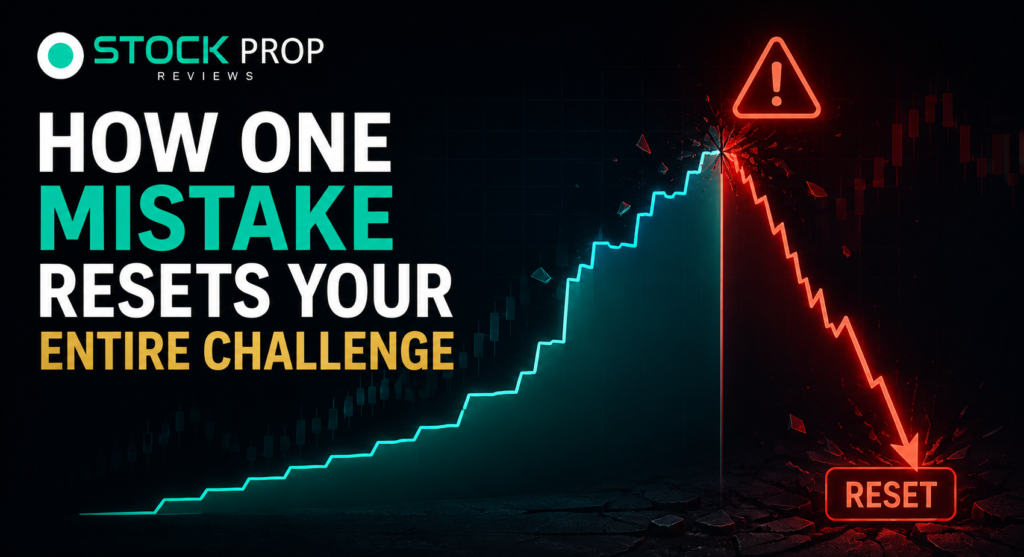
Most traders fail a prop firm challenge not because their strategy stops working.
They fail for a choice.
Sometimes it is a revenge trade after a frustrating defeat. Sometimes it is increasing in size because the profit target is finally in sight. Others it’s as simple as sitting in a position through a news event they would have normally avoided.
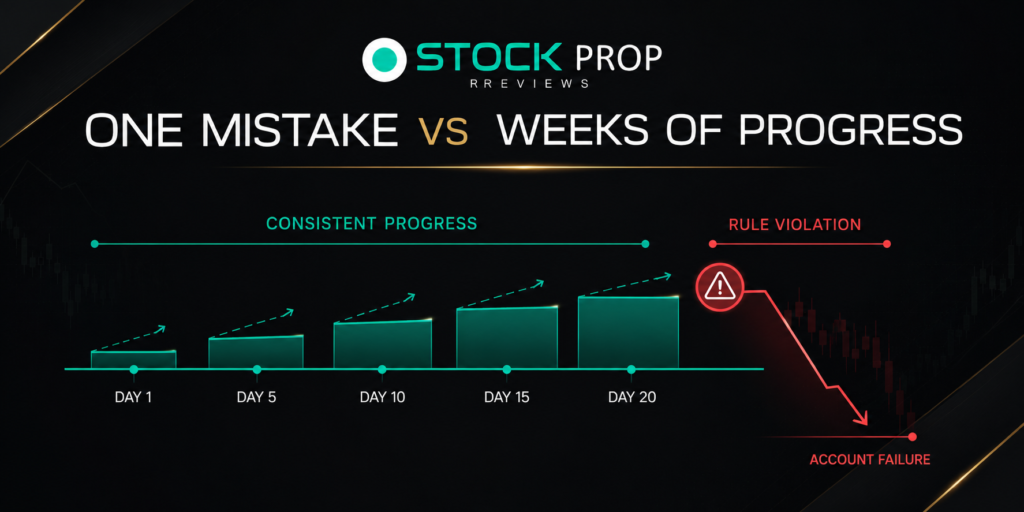
What is frustrating is that the mistake usually comes after a spell of good trading. A trader might be trading their plan, building steady gains for two to three weeks, well within drawdown limits. Then one slip in discipline wipes out all of that progress in minutes.
If you are currently doing a prop firm evaluation, this is the truth that you must know. Passing is seldom about finding more winning trades. It’s usually about avoiding the one mistake that makes a decent story a bad story.
This article is for traders in evaluation programs and funded account challenges. This isn’t for shortcut traders, challenge hacks or to get around risk rules.
Why Prop Firm Challenges Feel Unforgiving
One thing newer traders often underestimate is that challenge accounts are designed differently from personal trading accounts.
When you trade your own capital, a bad day can usually be recovered from over time. In a prop firm challenge, the rules create hard boundaries. Once those boundaries are crossed, the evaluation is over regardless of how well you traded beforehand.
That is why many traders describe challenge failures as feeling unfair. They remember the twenty disciplined trading sessions that came before the mistake and struggle to accept that a single violation erased all of it.
From the firm’s perspective, however, that single violation is exactly what they are measuring.
Prop firms are not only looking for profitability. They are looking for traders who can manage risk consistently under pressure.
The Pattern Behind Most Challenge Failures
Looking at the feedback of traders at several firms, there is a common pattern.
The trader begins slowly. Position sizes are managed. Respect the rules. There is little emotional reaction to losses.
Then the account starts to move in the right direction.
Ironically, this is where problems often begin.
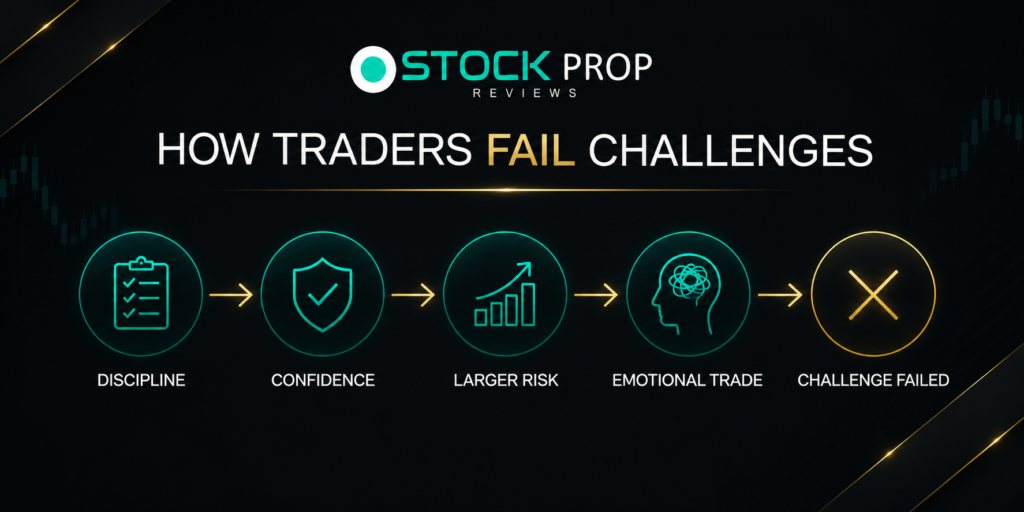
As confidence grows, discipline tends to loosen. A trader who normally risks 0.5% per trade decides to risk 1.5%. Someone who always uses a stop loss gives a position “a little more room.” A trader who would normally skip a news event decides to take a chance because they are only a few percent away from the target.
The market does not need many opportunities to punish that kind of behaviour.
What looks like one mistake on the surface is usually the result of several small decisions that slowly moved the trader away from their original plan.
The Mistake Is Rarely Technical
A lot of educational content focuses on entries, indicators, and setups.
Those things matter, but they are not usually responsible for challenge failures.
Most traders already know when they are breaking their rules.
They know they should not increase size after a loss.
They know they should not move a stop further away.
They know they should not chase a move they already missed.
The problem is not a lack of knowledge. The problem is the inability to follow that knowledge consistently when money and pressure become involved.
That distinction matters because it changes how traders should approach improvement.
Learning another strategy will not solve a discipline problem.
What Many Competitors Miss
Many articles about mistakes focus on recovery. They explain how to rebuild confidence after failure or how to stay motivated.
That advice has value, but it skips an important point.
Most challenge failures are predictable before they happen.
There are usually warning signs.
The trader starts checking account metrics every few minutes. They become obsessed with the profit target. They begin thinking about payouts before they have even passed the evaluation.
Their attention slowly shifts away from execution and toward outcomes.
By the time the actual mistake occurs, the psychological process has often been building for days.
Understanding those warning signs is far more useful than reading another motivational article after the challenge has already been lost.
Risk Management Still Decides Everything
This may sound boring compared to discussing strategies, but it remains true across almost every prop firm model.
Risk management is the factor that keeps traders alive long enough for their edge to work.
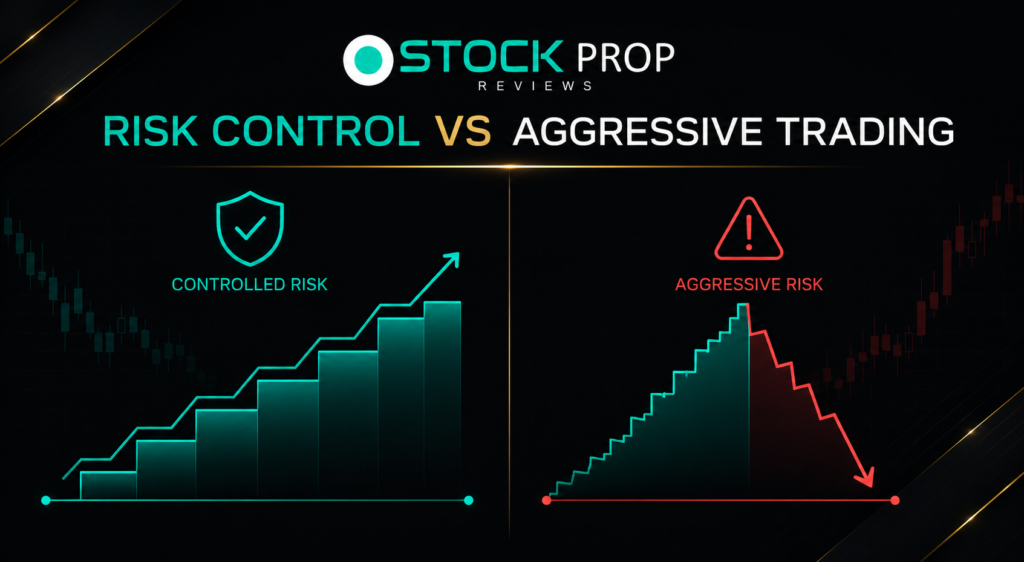
A trader with an average strategy and excellent risk control often outperforms a trader with a great strategy and poor discipline.
That becomes especially obvious during evaluations because drawdown limits leave very little room for emotional decision-making.
The traders who consistently pass challenges are not always the traders with the highest win rates.
More often, they are the traders who avoid turning a normal losing day into a catastrophic one.
Who Is Most Likely to Struggle?
Prop firm challenges are often marketed as accessible to everyone, but that is not entirely accurate.
Traders who frequently change strategies, increase size after losses, or feel a constant need to be in the market usually struggle the most.
On the other hand, traders who are comfortable waiting for setups and accepting losses tend to adapt much better to evaluation environments.
That may not be exciting advice, but it reflects what actually happens in real trading.
The challenge rewards consistency far more than aggression.
Alternatives to Traditional Challenge Models
Not all prop firms use identical evaluation structures.
Some traders prefer alternatives depending on their trading style.
Multi-Phase Evaluations
These typically require multiple stages before funding.
The process is longer but may encourage steadier trading.
Instant Funding Models
These provide access to capital without traditional profit targets.
The trade-off is often higher upfront costs and different risk requirements.
Stock-Focused Prop Firms
Firms focused on equities may suit traders who prefer stock markets rather than forex or CFDs.
For example, TradeThePool operates as a regulated stock prop firm with transparent risk parameters and clearly defined evaluation rules. Readers can get up to 10% discount when purchasing through our TradeThePool link.
Final Thoughts
Failing a prop firm challenge is usually less dramatic than traders imagine.
In most cases, it does not happen because the market was impossible to read or because the strategy stopped working.
It happens because one decision broke the process that had been working up to that point.
That is why experienced traders often spend less time looking for better entries and more time building habits that prevent avoidable mistakes.
The market will always provide another opportunity.
A failed challenge often comes from treating one opportunity as if it were the last.
FAQs
How common is failing a prop firm challenge?
Very common. Most challenge failures result from risk management errors, drawdown violations, or emotional trading rather than poor market analysis.
Can one trade really fail an entire challenge?
Yes. If a single trade breaches a daily or maximum drawdown rule, the evaluation can end immediately regardless of prior performance.
What is the biggest mistake traders make during evaluations?
Revenge trading after a loss is among the most common causes of challenge failure because it often leads to oversized positions and rule violations.
Should I reduce risk when close to the profit target?
Many experienced traders do. Protecting accumulated gains is often more important than accelerating profits during the final stages of an evaluation.
Is a profitable strategy enough to pass a prop firm challenge?
No. A trader can be profitable overall and still fail if they violate drawdown limits, position rules, or other evaluation requirements.