When people look for the best prop firms for small accounts, they usually mean one thing. You want to be able to get money without putting too much of your own at risk, but you also don’t want to be stuck by rules that you don’t fully understand.
This guide is for traders who are thinking about opening a prop account with $5,000 to $25,000, especially those who are just starting out or who are still learning how to trade with real money. It is not for traders who use a lot of leverage, make decisions based on their feelings, or use aggressive scaling. Most of the time, mistakes in small accounts don’t get fixed, and most of the time, failures are due to bad risk management instead of bad strategy.
The goal here is clear. Explain which firms actually make sense at this level, where traders realistically fail, and what competitor reviews tend to leave out.
Why Small Prop Accounts Fail More Often
It’s easier to see the numbers in small prop accounts. In reality, they are often harder than big accounts.
A $10k account with a trailing drawdown does not behave like a personal $10k account. As equity increases, risk tolerance often shrinks. A trader can be profitable on paper and still violate rules during a normal pullback.
Another issue is pressure. When profit targets feel large relative to account size, traders rush trades, overtrade sessions, or trade news they normally avoid. This behavior is responsible for most failed evaluations.
Most comparison sites do not discuss this because it does not convert well. Traders need to hear it anyway.
What Defines a Small Prop Trading Account
A small prop account usually ranges from $5,000 to $25,000 in notional capital. You trade under predefined rules and receive a profit split if funded.
It’s not the size of the account that matters, but how drawdowns are figured out, how losses are enforced, and how payouts are handled. These facts change the whole trading experience.
In practice, two accounts of the same size can feel very different.
How We Compared These Prop Firms
This comparison is based on how small accounts work in real trading situations, not on what marketing says.
We looked at how drawdowns work, how often people lose money each day, how well trades are executed, and how likely it is that someone will get their first payout without having to reset. Companies that used confusing language or aggressive trailing models were punished.
This method shows up holes left by competitors like Benzinga and FundedAccountPro, who often put cost ahead of staying in business.
FTMO for Small Accounts ($10k–$25k)
FTMO remains one of the more structured options for small prop accounts. Their $10k and $25k challenges are widely used and clearly documented.
The main advantage is a static overall drawdown. This gives traders a consistent risk ceiling that does not tighten as equity grows. Many traders find this easier to manage mentally.
However, daily loss limits are where most failures occur. A single volatile session or emotional response to early losses can end an account even when the broader strategy is sound.
Another overlooked issue is post-funding behavior. Many traders pass the evaluation but struggle to maintain consistency once payouts are involved. FTMO’s rules quietly favor steady, low-variance trading.
FTMO works best for disciplined day and swing traders who already trade with defined risk. It is a poor fit for news traders and high-frequency scalpers.
We break this down further in our FTMO review, including real payout timelines and rule enforcement behavior.
Trailing Drawdown Firms in the $5k–$25k Range
Many low-cost firms offer small accounts with trailing drawdowns. These are often marketed as beginner-friendly due to low entry fees.
Trailing drawdowns are the rule type that people get wrong the most. As profits go up, the maximum drawdown often stays the same compared to peak equity. This means that a trader who makes money can lose their account during a normal retracement.
Traders who increase the size of their positions after winning early on tend to lose the quickest. Traders who keep risk the same and accept slower growth do better, but not many have that kind of patience.
Competitor sites often say that trailing drawdowns are flexible. They don’t often say how strict they get when equity goes up.
We talked about this dynamic in our MyForexFunds-style relaunch comparison, which is why a lot of traders feel “tricked” even though they followed their strategy correctly.
TradeThePool Small Accounts ($5k–$25k)
BusinessThePool is not like most prop firms that use CFDs. It is a regulated stock prop firm that focuses on stocks instead of forex or synthetic instruments.
TradeThePool uses clear end-of-day risk limits instead of trailing drawdowns during the day. This clears up a lot of the confusion that traders at other companies find annoying.
Execution quality is more like what happens in real brokerage. Slippage and spreads act more like they do in real life, which is important for stock traders who hold positions during the day.
The bad thing is that opportunities don’t come up very often. Stock setups take longer, leverage is lower, and traders who are used to forex-style scaling may feel limited.
TradeThePool is one of the cleaner choices for small account equity traders who value rule transparency. If you buy through our TradeThePool link, you can save up to 10%.
Our review of TradeThePool explains how their rules are different from those of offshore prop models.
Cheap Small Prop Accounts and the Hidden Cost Problem
Some companies offer accounts for as little as $5,000. These are appealing to beginners, but they often have strict scaling requirements, delayed payouts, and aggressive trailing rules.
People don’t talk about reset behavior very often. Many traders fail more than once, which costs them a lot more than a better evaluation would have.
A low price doesn’t mean low risk. It often makes people more angry and speeds up burnout.
Side-by-Side Comparison for Small Accounts
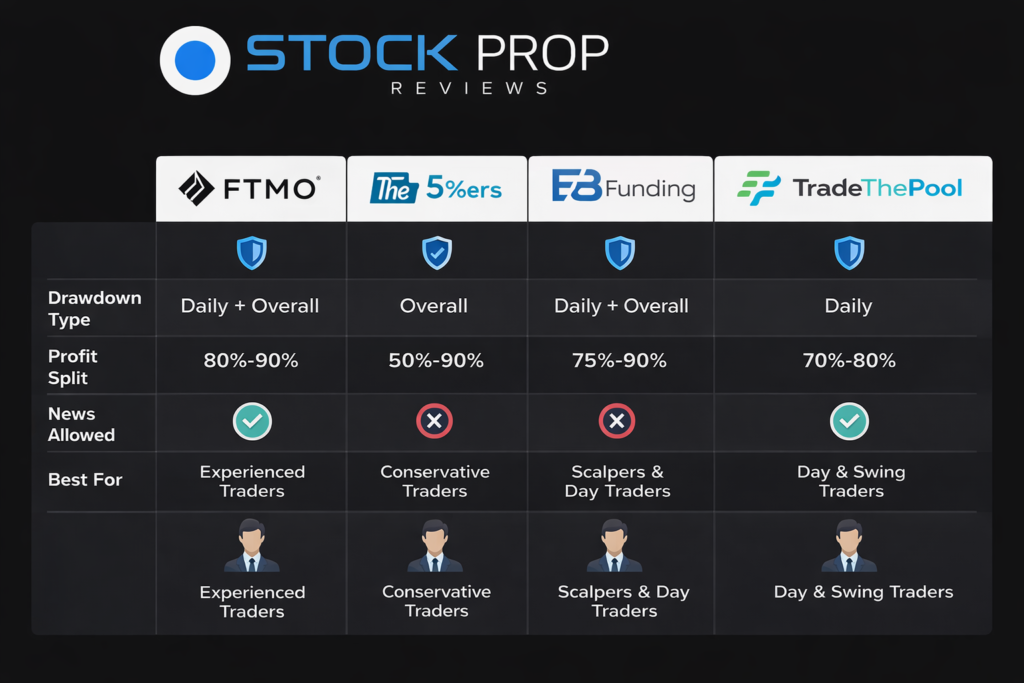
| Firm | Account Range | Drawdown Style | Trading Fit | Main Risk |
| FTMO | $10k–$25k | Static + daily cap | Day / swing | Daily loss limit |
| Trailing firms | $5k–$25k | Trailing equity | Patient traders | Equity pullbacks |
| TradeThePool | $5k–$25k | End-of-day | Stock traders | Lower leverage |
Strategy Fit Matters More Than Account Size
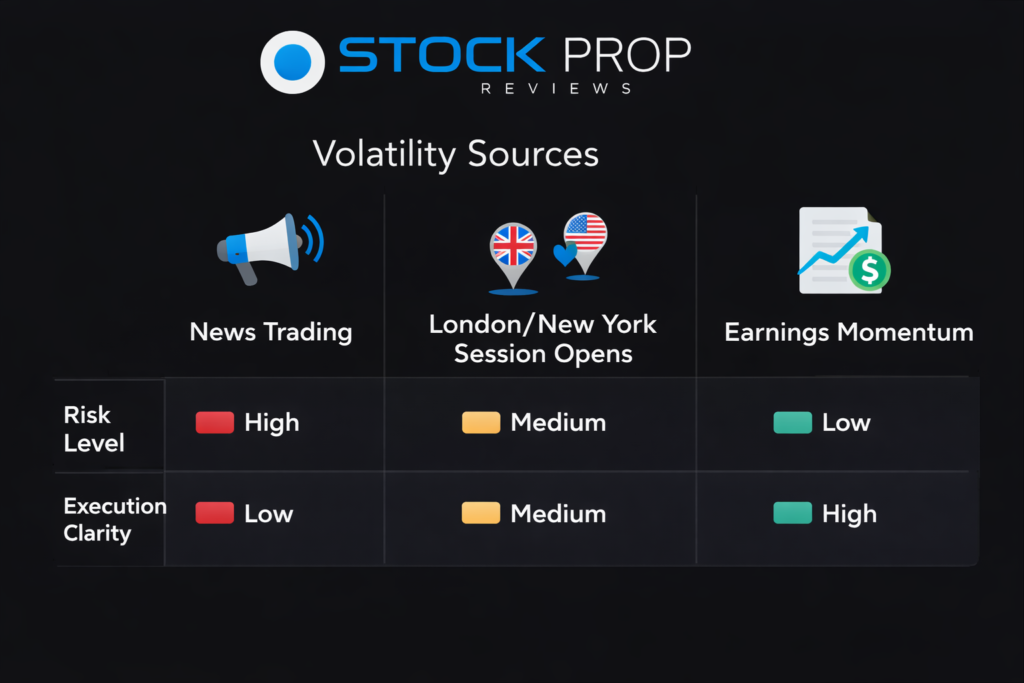
Scalping is the hardest way to trade with small prop accounts. Spreads, slippage, and daily limits quickly eat away at edge.
Swing traders usually do better, but they have to wait longer for their evaluations to be finished. Traders who win a lot and have low reward-to-risk ratios tend to last longer than aggressive trend followers.
Competitor content rarely talks about this, even though it often promotes flexibility without talking about statistical pressure.
Common Mistakes Traders Make
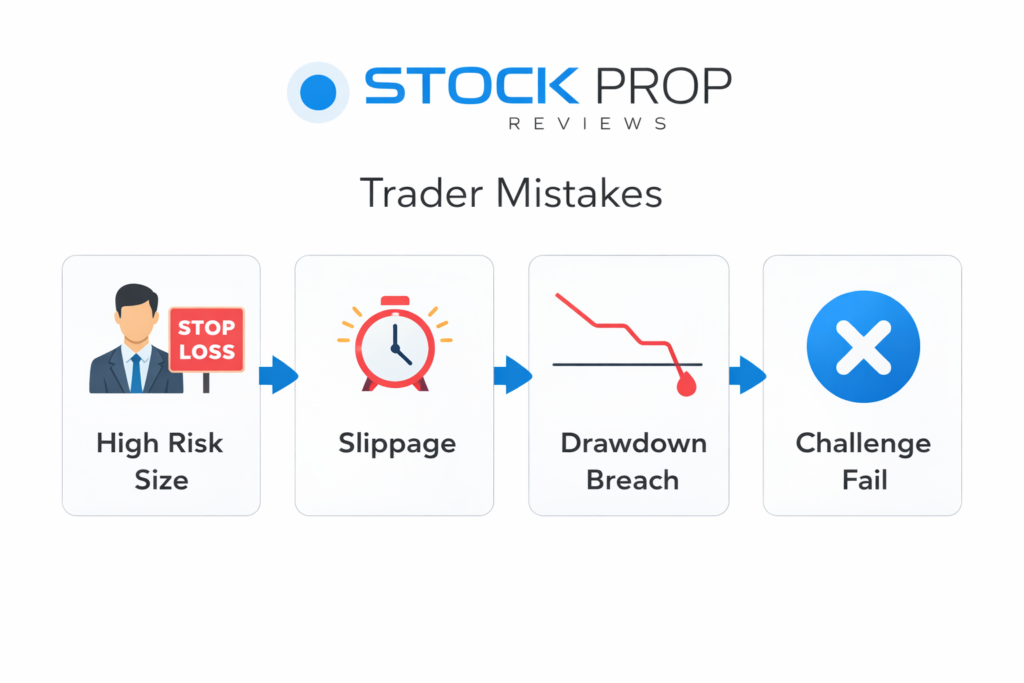
Most failures happen in the same way. Profits in the beginning make things bigger. Making decisions based on emotions is easier when you are bigger. Emotional choices lead to drawdown violations.
Another common error is trying to “finish the challenge” quickly. Prop firms are structured to reward patience, not urgency.
Understanding this early saves both money and confidence.
Who Should Avoid Small Prop Firms
If you can’t trade consistently with a small personal account, prop rules will make every flaw stand out even more. Small prop accounts are not for traders who don’t follow rules.
They are tests of stress.
Alternatives to Small Prop Accounts
Micro futures accounts, personal capital with broker rebates, or extended demo tracking before funding are better options for some traders.
In our analysis of prop firms vs. personal accounts, we look at these choices and talk about when prop trading makes sense.
Truth vs Opinion
The truth is small prop accounts can improve risk discipline.
The opinion is they are viable income sources for most traders.
Data suggests the majority never reach consistent payouts.
Psychology, not strategy, is the limiting factor.
Balanced expectations reduce frustration and impulsive decisions.
How to Choose the Right Firm
Don’t pay attention to headline prices. Pay attention to how drawdown works after profits, how losses are enforced, and how well the rules are written.
FTMO likes people who follow the rules. Trailing companies like to be patient. TradeThePool likes traders who are open and honest and who only trade certain stocks.
There is no option that gets rid of risk.
FAQs
Are small prop accounts good for new traders?
Only if the trader knows how to control risk. They are not kind places.
Which kind of drawdown is the easiest?
It is usually easier to handle static drawdowns than trailing ones.
No, you can’t make a living off of a $10,000 prop account. It isn’t realistic after rules and splits.
Why do most traders not pass evaluations?
Overtrading and not understanding how drawdown works.
Is TradeThePool safer than prop firms based outside the US?
For people who trade stocks, clearer rules and regulations lower structural risk.
Small prop accounts are not short cuts; they are tools. Traders who are careful last longer than those who want quick payouts.